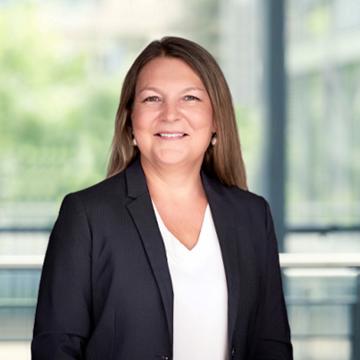
What does your typical working day look like?
There’s no such thing as a “typical” working day – and that’s exactly what I like about this job. As a Key Account Manager, I am the central point of contact for my clients – I am the one who is familiar with their organisation, their markets and their internal framework conditions. A typical working day therefore includes strategic discussions, process analyses, the preparation of quotes, coordination with our teams and, of course, the operational management of projects.
What is the appeal of customer contact?
That every person and company comes to us with a different question. It’s really exciting to find out what exactly is behind every enquiry: Why this text? For which target audience? In what context? And I love the moment when a simple order turns into a genuine relationship of trust.
What are clients most concerned about today?
The added value: where exactly does our work make a difference for the client? There are loads of people who can deliver texts. Structuring terminology, making processes more efficient, and deciding where AI makes sense and where it doesn’t – that’s precisely where we create measurable benefits. And that’s exactly what my clients want to talk about today.
Can you give us an example of where it is no longer just about translation?
Just about everywhere. Take, for example, an international product launch: it is important to establish terminology, define a suitable tone of voice for each market, decide which content should be translated and which should be created from scratch, while also taking into account local search engine optimisation, regulatory requirements and images. The text itself is just one element of many. Our job is often to structure all of this in advance. The translation is then the result of an overall concept – and not an isolated service.
Which solutions are often the surprising ones?
Actually, they are often the most cost-effective ones. A well-structured glossary and a carefully prepared corporate language may require a few weeks of work, but they save time and money over the years – and at the same time significantly improve the consistency of communication. And then there’s AI: a lot of people believe that you have to choose between “automating everything” and “doing everything by hand”. The right solution is almost always a sophisticated combination – depending on the type of content. This is precisely what consulting is all about: defining the right combination.
When does a project become particularly exciting?
When it seems impossible at first glance – twelve languages, an unusual format, a tight schedule, highly specialised content. This requires creativity, organisation and a strong team.
But to be honest, the projects I remember most are those that start with a blank sheet of paper. For example, a client will say: “We've lost our way with our multilingual communication; can you help us put it right?” Then we analyse the situation, implement solutions and adapt them on an ongoing basis. A year later, we look at the figures together: shorter lead times, lower costs and consistently high quality. Then we’re no longer “just” a service provider, but a genuine partner.
What do you think makes for good collaboration?
For me, good collaboration is based on three things: transparency – I am frank about what is feasible and what isn’t; context – the better I understand a company and its objectives, the more helpful my advice can be; and continuity – the best solutions do not come from a single project, but from long-term collaboration.
What have you learned from clients?
Every industry has its own logic, language and framework – and it’s always better to ask another question than to make an assumption.
Julie, please complete these sentences:
A good day for me starts with…
a walk with my dog Moka.
and ideally ends with …
a good book.
When I’m not at work, you’ll often find me…
in the mountains.
My favourite place is …
wherever I am with the people I love.
If there was one language I could choose to speak perfectly straight away it would be …
Japanese.
I’ve got no time for...
the smell of cigarette smoke.
I’ve always got time for...
dancing (Lindy Hop, boogie-woogie).
Three things I always have with me...
my mobile phone, my headphones, my sunglasses.